Public Night Cancelled
The observatory will be closed on Saturday, March 13 due to unfavorable weather.
It’s been two years since I’ve written about our planetary neighbor Mars. Why? As it is with most things astronomical, events in our solar system occur in a cyclic manner. Earth and Mars have a close encounter every 26 months. During the last few months the Earth has been catching up to Mars in our respective orbits. Back on January 27 these two planets approached each other to within 61,721,726 miles at their closest. That distance is still quite large, considering back on August 27, 2003, the Earth and Mars were only 34,646,418 miles apart. Unfortunately not all Mars close encounters are favorable ones. That fact is due to the eccentricity of Mars’ elliptical orbit and its distance from the Sun.
This month Dave Huestis presents some of the astronomical highlights for March. That is of course if the persistent poor weather lessens its grip on southern New England. When that transition does take place we will still be able to observe Mars, and Saturn will become the primary object of focus as we head into Spring. Daylight Saving Time at mid-month will force stargazers to begin observing one hour later. And near month's end Venus and Mercury will put on a fine show.
What is the most colorful double star in the night sky? Most amateur astronomers would vote for β Cygni (Albireo). Others might cite γ Andromedae (Almach), ι Cancri, ξ Bootis, or η Cassiopeiae. Sadly overlooked is a double star that might challenge them all – h 3945 in Canis Major. It is arguably the most colorful double star in the winter sky and, in fact, has been nick-named the “Winter Albireo.”
My advice to all considering a cruise is to bring with you either large pair of binoculars or a small aperture telescope. One would think conditions on the ship would provide both enhancements and some challenges for viewing. The dark sites achieved at sea are fantastic with slight interference from the ship lighting. The low elevation and the possibility of a thin fog that may arise depending on water verses air temp are the main challenges. The other perceived issue most would think is the movement of the ship on water, but my experience on both cruises has shown this not to be significant obstacle due to the ships size and calm seas. On both cruises we had balcony suites, nothing like having the view of the sea 24/7. It’s nice to have an early morning coffee, a late night drink or to just get away by your selves for a while. It also provides a great observing platform after the sun has set and skies have darkened.
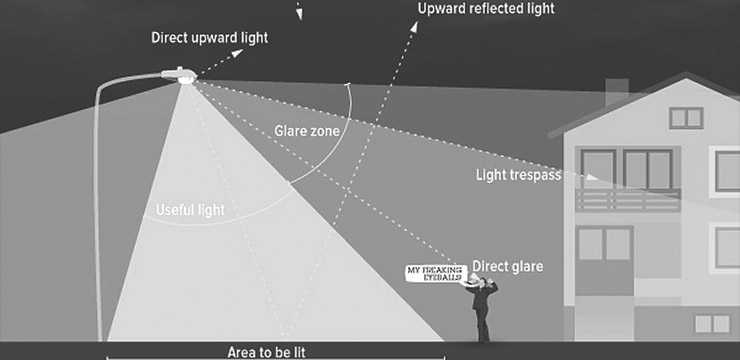
GLOBE at Night is an annual 2-week campaign in March. People all over the world record the brightness of their night sky by matching its appearance toward the constellation Orion with star maps of progressively fainter stars. They submit their measurements on-line and a few weeks later, organizers release a map of light-pollution levels worldwide. Over the last four GLOBE at Night campaigns, volunteers from over 100 nations have contributed 35,000 measurements.
Sky Data
March 14, 2010 22:07 EDT 2:07 UT
Conditions at Seagrave Observatory
 | The Moon |
|---|
| Age | 29.4d |
| Illum | 0% |